

What Oleria discovers
Once connected, Oleria continuously discovers and maps the following from your 1Password account:- Non-human identities (NHIs) - credential-bearing items in your vaults — API keys, passwords, SSH keys, and database credentials stored in 1Password.
- Resource instances - the vaults in your 1Password account, the items they contain, and the access grants tied to each vault.
- Activities - audit events, sign-in attempts, and item usage reported through 1Password’s Events Reporting API.
Oleria authenticates to 1Password using a Service Account (created in the steps below), but the NHIs it discovers are credential-bearing vault items — not the Service Account itself. 1Password’s Events Reporting API is scoped to account-wide activity, not individual user profiles.
Prerequisites
- 1Password administrator access, to create a Service Account and an Events Reporting API token.
- Your 1Password Events Reporting region (United States, Europe, or Canada) - you’ll need this when connecting in Oleria.
Create a Service Account in 1Password
1
Open the Service Account wizard
Sign in to 1Password as an administrator, select Developer in the sidebar, then open the Directory tab. Under Access Tokens, select Service Account.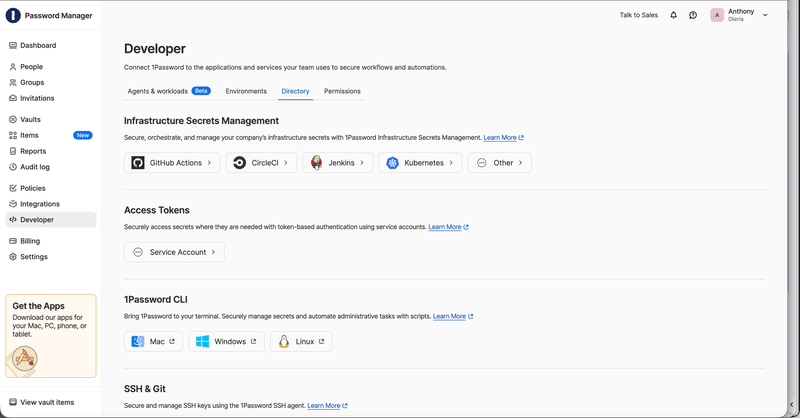
2
Name the service account
Enter a descriptive name, for example 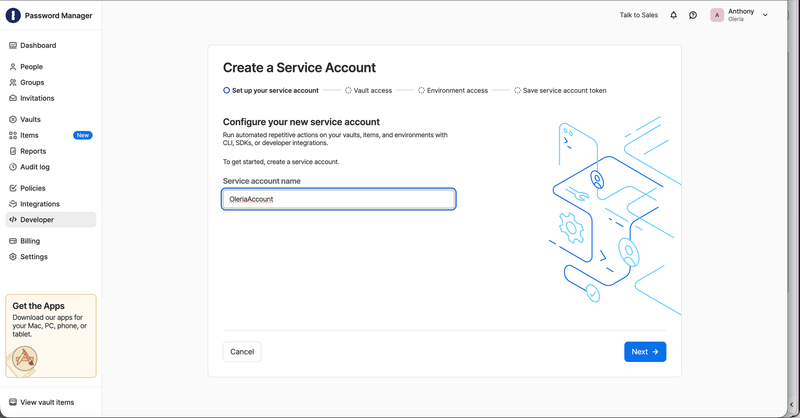
OleriaAccount, then select Next.3
Grant vault access
Select all the vaults you want Oleria to inventory and set Read access for each, then select Next.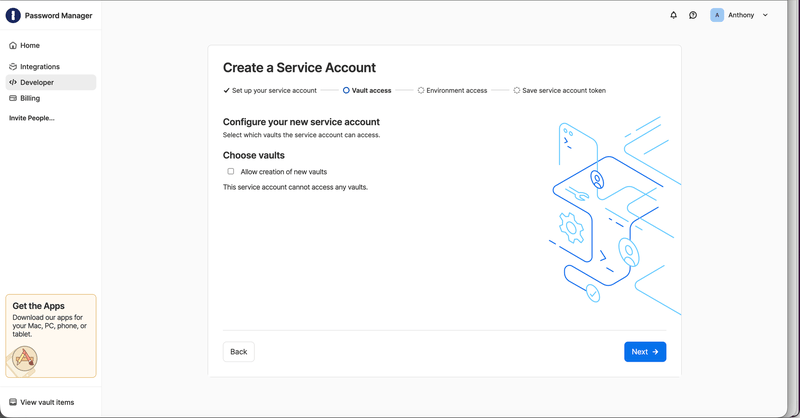
Leave Allow creation of new vaults unchecked - Oleria only needs read access to inventory existing vaults.
4
Grant environment access
If the wizard shows an Environment access step, you can leave it unselected and select Next — Oleria doesn’t use Environments.
5
Save the token
Select Create Account, then copy the generated authorization token immediately, or select Save in 1Password to store it in a vault.
Create an Events Reporting API token in 1Password
1
Open Events Reporting
Select Integrations in the sidebar. In the Events Reporting section, select Other, since Oleria isn’t a listed SIEM platform.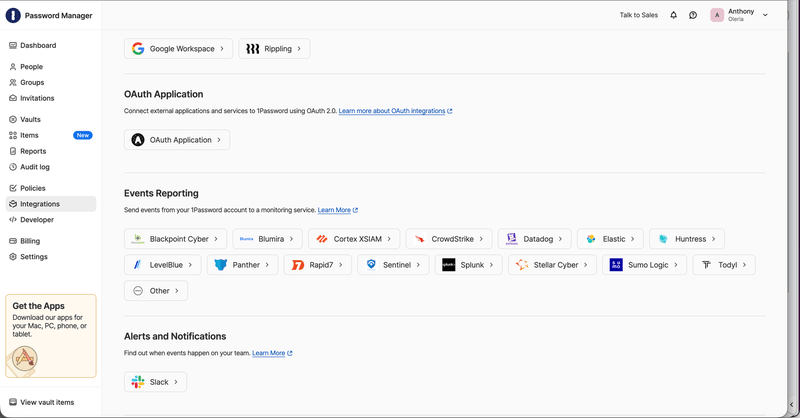
If your account already has integrations configured, selecting Integrations may open directly to a Directory view instead.
2
Name the integration
Enter a descriptive name, for example 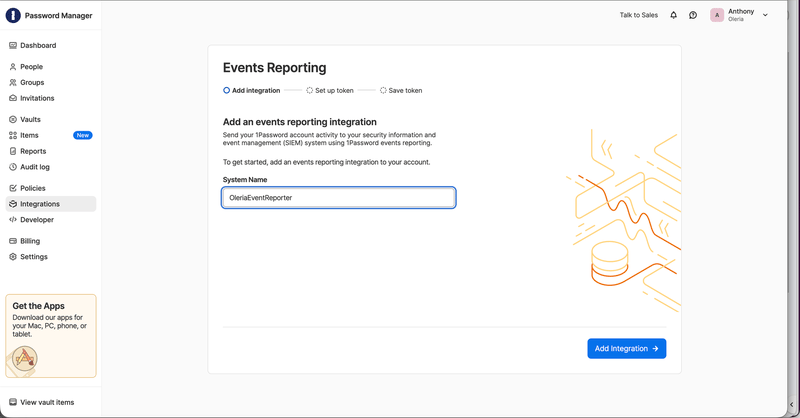
OleriaEventReporter, then select Add Integration.3
Configure the token
Enter a Token Name, set Expires After (30, 90, 180 days, or Never), then turn on all three Events to Report toggles - Sign-in attempts, Item usage events, and Audit events. Select Issue Token.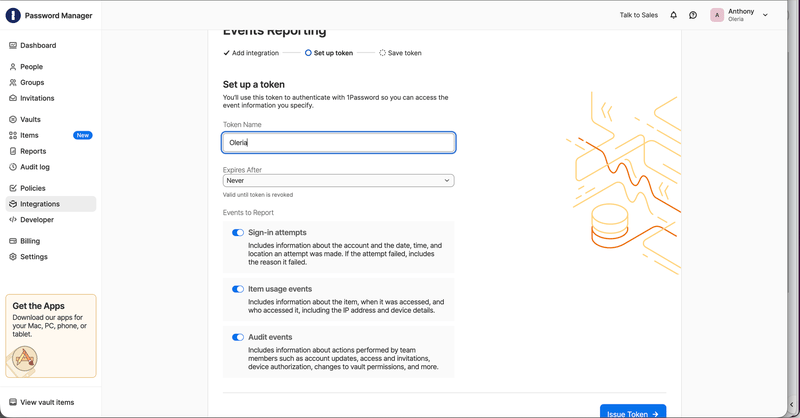
4
Save the token
Copy the generated token immediately, or select Save in 1Password to store it securely.
5
Note your Events Reporting region
Confirm which region your 1Password account reports events from - United States, Europe, or Canada. You’ll select this region when connecting in Oleria.
Connect 1Password to Oleria
1
Open the integration
Go to your Oleria workspace, select Integrations -> select 1Password.
2
Complete the connection form
Select Continue and fill in the connection form: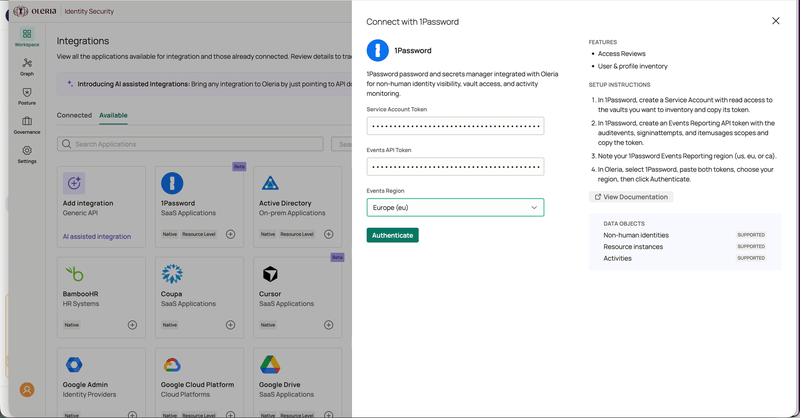
3
Save the integration
Select Authenticate to validate and save the integration. Oleria checks both tokens against 1Password before saving.
Verify the integration
Confirm the 1Password instance appears in your Oleria workspace’s connected integrations. After the first sync completes, you can review the discovered credential items, vault access, and activity in your Oleria workspace.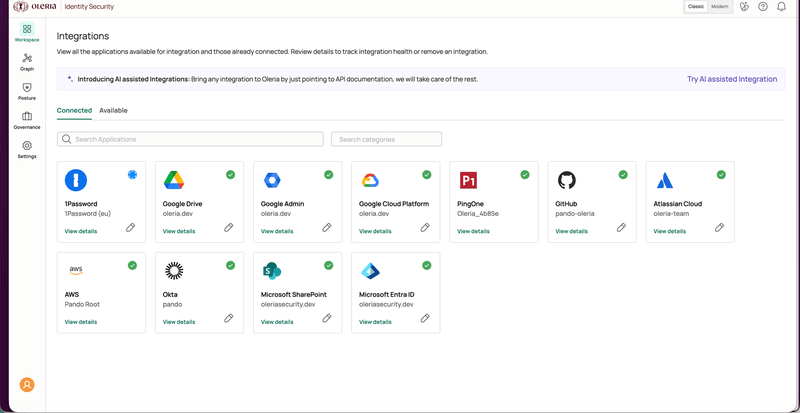
If you rotate either credential, edit the integration in Oleria, paste the new token, and select Update. The next sync runs with the new credentials.